One thing I have noticed many times in my HR career is that people often connect promotion with years of experience. Someone has been in the same position for five years, so we automatically think, “This person should be ready for promotion.”
But is that always true?
In my experience, not necessarily.
Years of experience matter, but they do not automatically mean someone has developed the skills, mindset and capabilities required for the next position. I have seen people with fewer years of experience move into bigger roles because they had already developed many of the capabilities needed for that role.
That is why I believe promotion readiness should be looked at differently. Promotion Is Not Just About Years of Experience. Let’s take a simple example.
Two employees are working as HR Executives. Employee A has been in the role for six years. Employee B has been in the role for three years. If we look only at experience, Employee A may appear to be the obvious choice for promotion.
But what if Employee B has already developed strong capabilities in:
- Employee relations
- Team leadership
- HR analytics
- Workforce planning
- Decision-making
- Communication with senior leaders
- Project management
And Employee A has mainly continued performing the same responsibilities for six years? Who is more prepared for the next role?
This is where I believe organizations and employees need to change the way they think about career growth.
Experience tells us how long someone has been doing something. It does not always tell us how much the person has developed.
Look at the Role You Want, Not Just the Years You Have
If you want to become an HR Manager, Director or move into any other senior position, don’t only ask:
“How many years do I need?”
Ask:
“What does this position actually require?”
This simple change in thinking can make a big difference.
Take the job description of the position you want. Read it carefully. Identify the skills, knowledge, behaviours and responsibilities expected from someone in that role.
For an HR Manager, for example, the requirements may include people management, employee relations, HR strategy, budgeting, talent management, communication, problem-solving, business understanding and leadership.
Now assess yourself honestly. Which areas are you already strong in? Where are your gaps? What have you actually done that demonstrates your readiness? That exercise can tell you much more about your career readiness than simply counting your years of experience.
The 70–30 Rule for Promotion Readiness
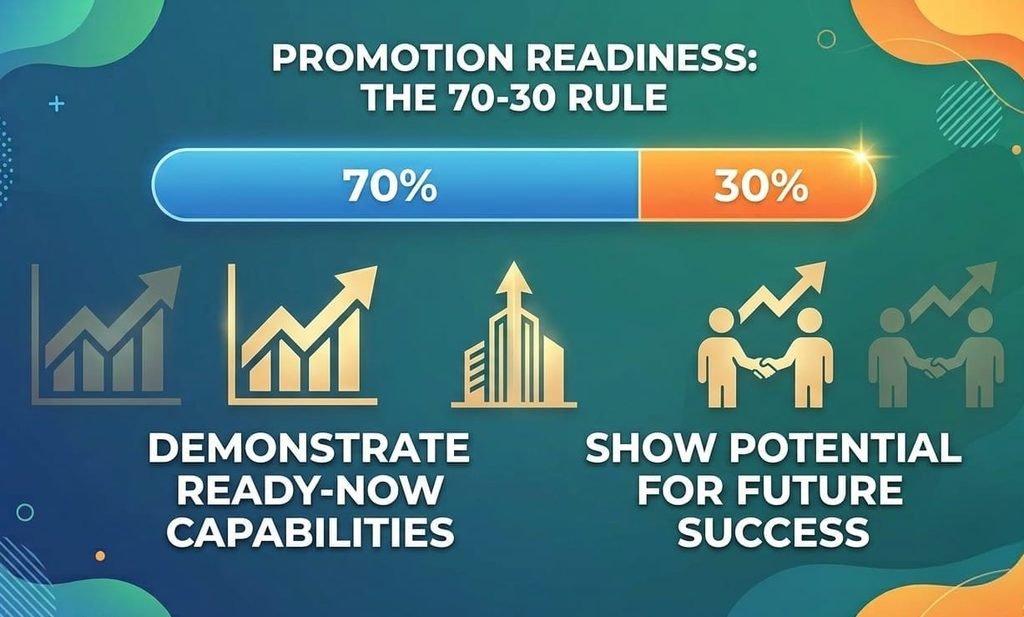
My view is that you should aim to develop around 70% of the key capabilities required for your desired position before you are promoted.
Why 70%?
Because you don’t need to know everything before moving into the next role. If you wait until you have 100% of the knowledge, experience and confidence required, you may wait forever. Every new position comes with something you have never experienced before.
The remaining 30% can develop through coaching, training, stretch assignments, exposure and real experience in the new role.
A promotion should give you room to grow. It should not mean you already know everything. The important thing is to have enough capability to step into the role and enough learning agility to handle what comes next.
“The only person you are destined to become is the person you decide to be.”
— Ralph Waldo Emerson
Start Preparing Before the Promotion Comes
If you have a position in mind, don’t wait for someone to tell you that you are ready.
Start preparing now.
Let’s say your goal is to become an HR Director.
What would you need to be good at?
Maybe your financial understanding needs improvement. Start learning more about budgeting, financial performance and business results.
Maybe your strategic thinking needs development. Volunteer for projects where you can understand wider business decisions. Maybe you need more exposure to senior leaders. Look for opportunities to participate in cross-functional projects or management discussions. Maybe your presentation skills need strengthening. Take opportunities to present your ideas, even when the audience is small.
This is how you build your 70%.
The promotion may come later, but your preparation should start much earlier. Don’t Confuse Repetition With Development
This is one of the most important lessons I have observed in HR. Someone can perform the same job for ten years without developing significantly.
Another person can spend three years in the same position while continuously taking on new responsibilities, learning new skills, working on projects and stepping outside their comfort zone.
Both have “ten years” and “three years” of experience. But the depth of their experience may be completely different. This is why, when I think about promotion readiness, I don’t believe the first question should be:
“How long have you been doing this job?”
A better question is: “What have you developed during that time?”
That question tells us much more. Take Ownership of Your Career Development
Managers and organizations have an important responsibility to develop their people. But employees also need to take ownership of their own growth. Don’t wait for your manager to identify every skill you need. Don’t wait for a promotion announcement before you start learning. Look at where you want to go and start building yourself for that destination.
Ask for feedback.
Find a mentor.
Take relevant training.
Volunteer for projects.
Learn from people who are already doing the job you want. Most importantly, turn your career goal into a development plan. Your development plan does not need to be complicated. Identify your target role, understand its key requirements, assess your current capability and decide what you need to develop next.
Then keep reviewing your progress. Promotion Should Be About Readiness, Not Just Tenure. A promotion should not be based only on how long someone has been in a position. Years matter. Experience matters. But readiness matters more.
If you want a particular position, study what that position requires. Identify the key capabilities. Assess yourself honestly. Build the 70% you can develop before the promotion. Then allow the remaining 30% to come through continuous learning, coaching, new responsibilities and real experience in the role. I have always believed that career growth becomes more meaningful when we stop waiting for opportunities and start preparing ourselves for them.
Someone with fewer years of experience can sometimes be more ready for the next role than someone who has been waiting for years. So, instead of asking “When will I get promoted?”, perhaps ask yourself:
“If I were promoted tomorrow, how ready would I actually be?” Don’t just count your years. Measure your development.
Test Your Knowledge
Think you got the key points? Take the quick quiz and see how much you remember.